Startups
Build streamlined workflows and manage growing teams without heavyweight tooling.
Modern businesses need more than basic task management tools — they need connected digital products that bring projects, people, workflows, communication, data, and automation together in one intelligent environment. 11SEAS builds custom productivity software around the specific needs of your users and business.
Our productivity software development services cover:
We focus on creating software that's simple enough to use every day and powerful enough to support growing teams.
Productivity software refers to digital applications that help individuals and organizations plan, organize, execute, track, and improve their work. Instead of switching between disconnected tools, businesses can use a centralized platform designed around their workflows — bringing together:
Systems that stay fast whether a team has fifty tasks or fifty thousand — built around how work actually gets planned, assigned, and closed out.
A single digital environment where teams communicate and execute work without constantly switching between applications.
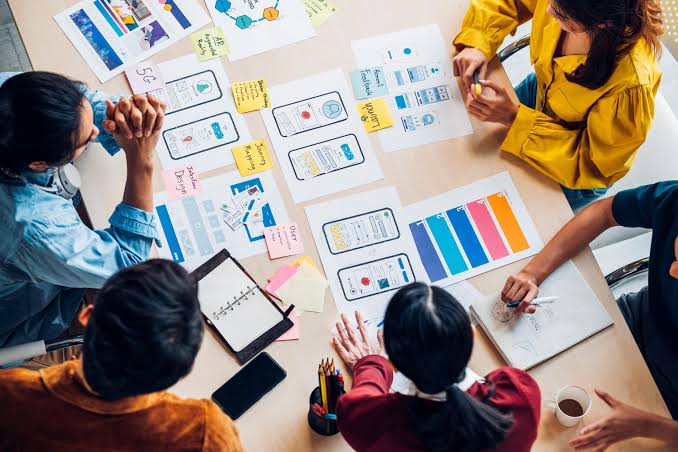
Rule builders and integrations that let teams remove repetitive steps themselves, without needing an engineer for every small automation.
Low-friction time capture and productivity analytics that show where hours actually go, without turning into a surveillance tool.

Productivity tools are judged on latency. These are the technologies we reach for when milliseconds matter.
Beyond the core platforms above, we extend productivity software with enterprise-grade controls, mobile access, and connected data as your team grows.
Every build includes performance budgets and load testing at realistic data volumes.
Users can interact with an AI assistant to find information, create tasks, summarize work, generate reports, or perform routine actions in natural language.
AI can help users prioritize tasks based on deadlines, importance, workload, and project requirements — surfacing what actually needs attention first.
AI can analyze meeting transcripts and generate summaries, action items, decisions, follow-up tasks, and key discussion points automatically.
AI can identify repetitive processes across a team's daily work and help automate routine operations that would otherwise eat up hours every week.
Productivity platforms can use AI to help teams draft emails, reports, project summaries, documentation, meeting notes, and proposals.
AI-powered search can help users find relevant information across documents, projects, conversations, and knowledge bases in seconds instead of digging through folders.
From two-person startups to distributed enterprises, custom productivity software adapts to how your team actually works.
Build streamlined workflows and manage growing teams without heavyweight tooling.
Manage sprints, tasks, releases, documentation, and collaboration in one place.
Coordinate campaigns, clients, content, deadlines, and approvals across accounts.
Manage client projects, tasks, resources, and billable hours from a single system.
Track projects, employees, documents, and client communication in one workspace.
Coordinate distributed employees through centralized digital workspaces.
Connect multiple teams and business processes through scalable productivity platforms.
The same platform can flex to support different jobs across the organization.
You don't need to build every feature on day one. A focused MVP validates your concept with real users before significant resources are invested.
From first conversation to a scaling platform, here's how we take a productivity product from idea to production.
We understand your business model, users, workflows, problems, and product goals.
We define the product scope, user journeys, MVP features, and technology roadmap.
We design intuitive interfaces that make complex workflows easy to understand.
Our team builds the web app, mobile app, backend, APIs, database, and integrations.
Where appropriate, we integrate AI, automation, analytics, and intelligent workflows.
We test functionality, responsiveness, security, performance, and user experience.
We deploy the product and prepare the infrastructure for real users.
We continuously improve the platform based on feedback and business growth.
Productivity software succeeds or fails on whether people actually adopt it.
We don't simply build features — we focus on the problem your product needs to solve.
We build software around your workflows instead of forcing your team into a predefined system.
We incorporate AI and automation into productivity products to reduce repetitive work.
We build products with future growth, integrations, and evolving requirements in mind.
We prioritize intuitive interfaces that encourage adoption and daily usage.
From strategy and UI/UX to development, testing, launch, and ongoing improvements.
Productivity & SaaS
Next-generation platforms combine AI, automation, predictive analytics, and real-time collaboration — helping teams move from manually managing work to intelligently orchestrating it.
Productivity software is technology designed to help individuals and teams organize work, manage tasks, collaborate, automate workflows, track progress, and improve efficiency.
Productivity SaaS is cloud-based productivity software delivered as a subscription service. Users typically access it through a web browser or mobile application.
We can develop project management platforms, task management applications, team collaboration software, workflow automation platforms, time tracking systems, AI productivity tools, employee productivity platforms, knowledge management systems, and custom SaaS products.
Yes. AI can be integrated into productivity applications for task prioritization, document analysis, meeting summaries, content generation, intelligent search, workflow automation, and AI assistants.
Yes. Productivity platforms can include shared workspaces, project management, communication, calendars, file sharing, notifications, time-zone support, and remote collaboration features.
Yes. We can help define the MVP, design the user experience, develop the core platform, integrate required services, launch the product, and create a roadmap for future development.
The cost depends on the product's features, complexity, number of platforms, integrations, AI requirements, security requirements, user volume, and development scope. A focused MVP generally requires less investment than a large enterprise productivity platform.
Yes. Productivity platforms can connect with CRM, accounting, calendar, communication, storage, payment, analytics, AI, and other systems through APIs, webhooks, and supported integrations.
Yes. A productivity product can be developed for web, iOS, Android, or multiple platforms depending on the requirements and target users.
Yes. Existing applications can be redesigned, optimized, migrated, integrated, or extended with new functionality depending on the current technology and architecture.
Let's turn your productivity software idea into a powerful digital product.
In productivity software, performance isn't a technical detail — it's the core value proposition. A tool that saves thirty seconds a task but costs ten in friction has spent most of its own benefit.
Get clarity on your idea, scope, and next steps — in one short call.